We live in a time of profound and pervasive, multidimensional crisis.
Pollution is altering Earth’s atmosphere, while heating the ocean, melting glaciers, depleting watersheds, and taking lives.
Agriculture is eroding its own potential, degrading rich naturally occurring ecosystems and destroying Nature.
The food we do produce is so highly processed it is causing non-communicable diseases that kill tens of millions every year.
Food and water scarcity, the disappearance of rural livelihoods, and political violence, become flashpoints for conflict.
What it means to be from a given place, to do a certain kind of work, to harbor aspirations that a life of safety and thriving will be possible, to make choices that would facilitate such a good life, all of these are in question. Political institutions are roiled by disinformation, the desperation of a general public that feels they have been abandoned, and disruptions operating at system level.
Powerful elites are actively discounting the inherent worth and dignity of the human person, as they invest unprecedented sums to develop technologies designed to sideline humanity in decisive ways.
Those who hold the most wealth are redirecting investment toward their own income, depleting the labor share of income—which is money earned for work performed.
Public authorities and private businesses, even medical professionals, are being told to use artificial intelligence to make life and death decisions, as if we were all obliged to subject ourselves to such a perilous experiment.
And yet, it is the dreaming capacity, the ability to value innocence, truth, and justice, and to cooperate to overcome adversity, these deeply human qualities, that offer us our best chance of emerging from the worsening atmosphere of enduring crisis.
So, how do we dream our way out of this?
First, we must recognize that every human person has inherent worth and dignity. We already, as a community of nations, agreed the Sustainable Development Goals, “a common-sense roadmap to functioning societies that intelligently meet the needs of human and planetary health”—the commitment at the core of international law.
We must read our own founding laws in the same way: The Declaration states we are all equal and our human rights are universal and unalienable. The Constitution establishes a republic whose purpose is to establish justice, promote the general welfare, and safeguard “the blessings of liberty“—including Nature, health, learning, effective local self-government and personal autonomy—for future generations.
As John McCain wrote:
“Human rights exist above the state and beyond history. They cannot be rescinded by one government any more than they can be granted by another. They inhabit the human heart, and from there, though they may be abridged, they can never be extinguished.”
There is never a circumstance in which power has legitimate authority to override the human rights of even the most marginalized and powerless person.
Whatever verifiable insights botnets powered by machine learning can come up with, it is clear from the early years of this high-stakes experiment that human judgment, nuance, and the ability to see beyond obvious representations of the generic, cannot be replaced by automated ‘generation’ of art and language.
Art is something altogether different from repetition. The artist is an artisan whose craft is the blending of soul and expression.
Poetry is ‘creation’ in the sense that it unashamedly endeavors to speak in ways never tried before, while making perfect sense to any attentive reader. A poet cannot succeed without both speaking truth and surprising the reader with small acts of discovery.
In this sense, the poet does not write for lovers of poetry, but for those that may never know the poet or the product of their dreaming spirit existed. That person may discover the poet’s work in a moment of great need, or lighthearted escape, and find themselves aware of our common humanity in ways they had not before.
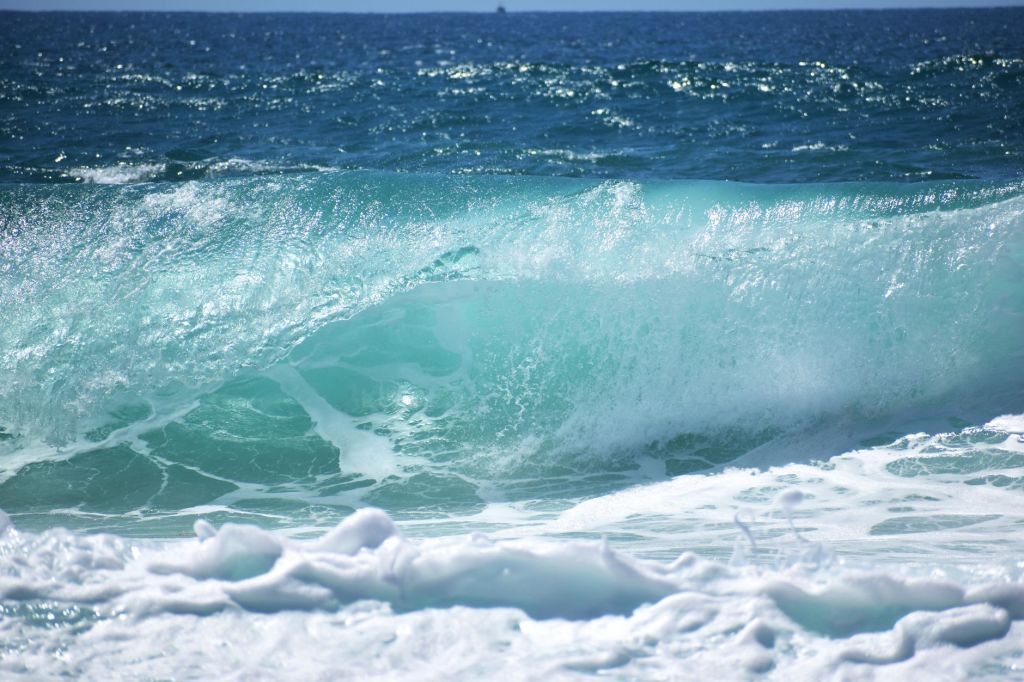
Neruda explains that the poet inhabits “the borderless wave” so that anyone who experiences imprisonment, in any of its forms, “can hear and lift their gaze and ask how will I get to the ocean?“
The inventor must do what Harriet Tubman so bravely did: remake the boundaries of what is possible for people who may never know the name of their rescuer, by thinking carefully about unfair and unnecessary limitations, and then slipping past them, and carving out a new space for living free from accident or cruelty.
The diplomat also has this uncertain world-building creative work on their desk—the work of smoothing out dangerous frictions, of finding ways to uphold foundational principles in law and practice, of coordinating language to serve, rather than sift away, what is best in the raw experience of being human.
To be hopeful is to reject surrender.
It is the work we take up when the storm engulfs us, and there appears to be no other world but the crisis.
It is inherently cooperative, because we cannot act on hope without others. We must connect what we do in service of the optimal outcome to the actions of countless others, whether they know their better moments set the stage for that connection or not.
We can explicitly state that:
- AI systems must not become separate from a commitment to honoring the worth and dignity of all human beings and of Nature.
- Education is not a luxury but a fundamental right inherent to existence as a human being.
- Each of us has an irreducible and unalienable right to know whether we are fostering harm and crisis or helping to reduce them.
- To be free is to be open-minded, open-hearted, and open to a future that works fairly and well for all people.
- Each of us has the potential to play the role of poet, artist, rescuer of the spirits and heartbeats of others.
- The purpose of organized politics is to center, defend, and uplift our humanity, to be allies against preventable harm.
We can do better; we must do better. Doing better is the implicit commitment we make to each other, every time we interact with anything made by human hands or set in motion by anyone’s effort and imagination.

