We can be human to each other.
This should not be a difficult idea to accept or endorse, but technology, politics, and distorted economic structures make it seem almost a controversial claim.
The idea of technological triumph has become embedded in our societies, to the point that we are often asked—in advertisements, political campaigns, and cultural experiences like cinema—to celebrate the very aspects of technology that put our personal agency and human dignity at risk. Consider these few examples:
- Internet search giants that ‘scrape’, store, and repurpose as much data as possible about your reading habits, your personal communications, your purchases;
- Digital currency that has no direct connection to measurable value in the real world, but allows illicit transfers to take place anonymously;
- Camera networks that capture evidence of your movements and create digital dossiers of your suspected activities and personal relationships;
- Copy-and-paste engines that have been trained to use original human commnications to imitate human thought and language, to replace human workers.
Pope Leo XIV, in his encyclical letter ‘Magnifica Humanitas‘ has called for a commitment to universal inherent human dignity. The first Pro-Human Assembly has just reiterated a call for responsible AI that keeps humans in charge, avoids concentration of power, protects the human experience, supports human agency and liberty, and is “accountable to human values and needs, in support of human flourishing.”
Human dignity is irreducible. Human agency is non-negotiable. The purpose of large public or private institutions is to provide better opportunities for the flourishing of people as individuals, communities, and wider socieities.
Today, The New York Times marks 175 years of continuous publication.
The newspaper’s publisher, A.G. Sulzberger, wrote a stirring opinion essay titled “The Story of America, Told in 15 Million First Drafts of History”, describing 61,011 editions and roughly 15 million articles as “the first draft of American history.” He notes that “A new volume is added daily, a report so robust and wide-ranging that, on average, it could fill a 1,000-page book.”
The work is human, intentional, coordinated, and traces the events that shape local, national, and global experience, from the front lines of armed conflict to strategic analysis of financial and policy decisions, the emergence of new technologies, and the ways in which individuals and communities exercise their basic rights, have them challenged, or upheld, and use them to make a society that moves toward greater and wider justice.
It matters that we put real human attention to the hard problems of our time—whether they meet us in the street or in the abstract. That means honoring the basic, transcendent truth that—in the words of Pope Leo—”The fundamental dignity of each person, therefore, is neither acquired nor earned, nor does it need to be justified.”
If we start from that understanding—the one that motivated the American Revolution, the Bill of Rights, the founding of the United Nations, and the very ideas of human rights and the wisdom of pursuing scientific knowledge to support healing and justice—the common sense inherent in the Sustainable Development Goals should be self-evident.
When the people of the United States committed, through the Agency for International Development (USAID), to rescue people in need from suffering and degradation, we were honoring this foundational commitment to the purpose of a free republic. In just 20 years, more than 90 million lives were saved. Human rights and dignity were made manifest and protected, and came to be treated as expected.
All of that good and necessary work must continue.
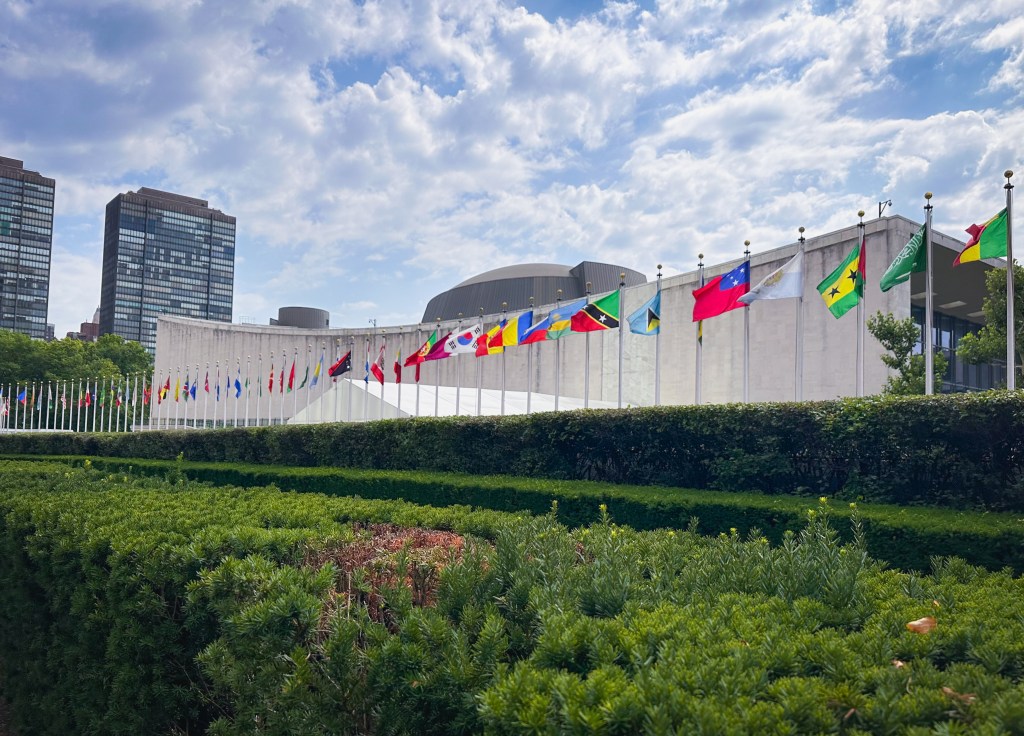
As the 193 nations of the United Nations General Assembly gather in New York this month, it is imperative that we return, collectively, to this fundamental purpose:
We can be human. We have a right to be decent and to be treated decently. Let’s make sure we are building a future that works that way.
 The Ecopoet