
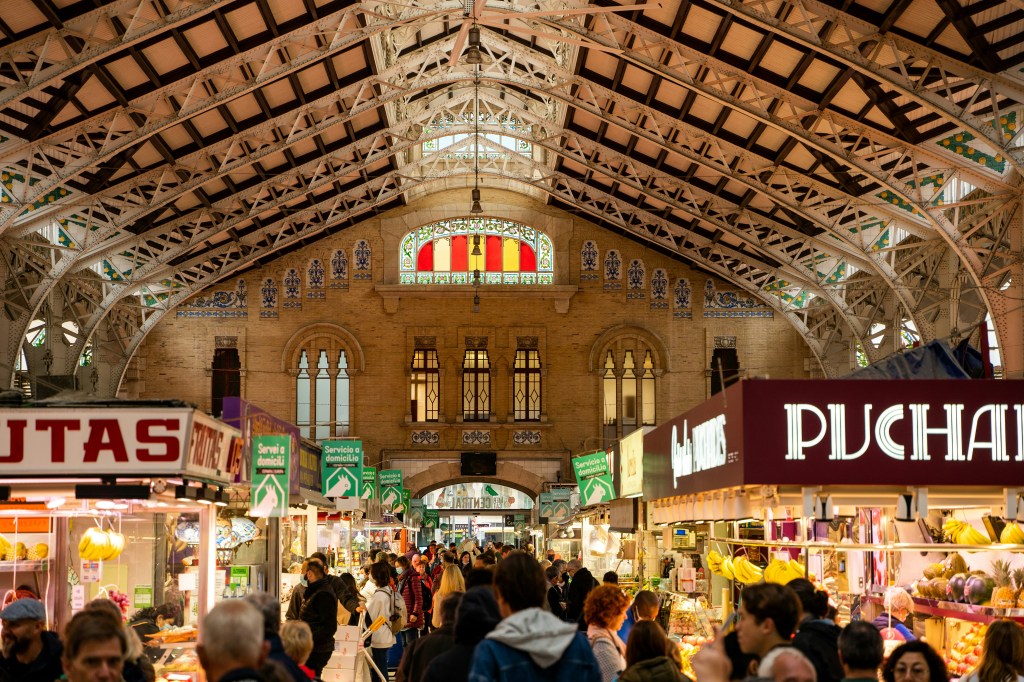
Markets would seem to be the furthest thing from the Ecopoet mindset. Markets can have a colonizing effect—taking over more space than we would want them to have, determining our options, shaping our lives, before we ever know it is happening. This is precisely why we must talk about them.
Like all forms of power sorting and allocation, markets can work against our personal, local, or collective freedom. On the other hand, a true open market is a vast catalogue of choices, and we are free to engage or not engage. In this sense, a true market—not rigged to favor the already powerful—recognizes and upholds our natural human freedom to seek, learn, evaluate, and choose.
In our time, when we talk about the sweep of major economic trends, this is not the experience most people tend to have, whatever nation or political system they live in. Local markets, that still operate inside this free-to-choose paradigm, have to compete with vast, global supply chains, which to some extent take over and influence their operations and composition.
Technology creates another layer of ambiguity and concern; information technologies have colonized value chains, everyday economic activity, interpersonal relationships, and even our way of understanding our own place in the world. Is a smart phone, for instance, really just a market for goods and services that travels with you everywhere? Is this what you want? Can you shape your engagement with technology to change this dynamic?
These are important, existential questions, that open up further questions about how we make or discover meaning, where we believe it resides, whether we can have purpose in our work, or whether purpose is lost in the flood of information, how we manage our personal friendships and family connections.
The 20th century gave us powerful evidence that authoritarian systems are bad at recognizing and defending our common humanity. By their nature, they impose outcomes and bar exercise of basic human rights. Markets that work inside of them are stripped of the freedom to innovate and diversify, so choices are greatly limited, and human beings and communities are made less capable.
The question for our time is not whether we should favor markets or something else, whether we should favor democracy or central control. The question is whether democracies are succeeding in keeping markets working in ways that recognize, uphold, and benefit humanity—all of us, regardless of wealth or position—and whether technology is making things better or worse.
This comes down to another ontological-phenomenological question—a question about what exists and how we encounter it: Are information systems genuinely structured to empower and uplift all human beings, or are they structured to shift income from everyone else to people who control information systems?
This is an onto-phenomenological question, because the answer says a lot about our relationship with information, and so our way of finding and making meaning, and defining our role in the ethical fabric of human existence. Are we beings that seek, hold, share, and reformulate insight, or are we surrendering our cognitive agency to information-controlling systems?
When you come upon a headline that will open a news report, are you reading words carefully selected to inform you, spark a moment of learning, and expand your understanding in both general and specific ways, or are you reading words carefully selected to grab your attention, because someone, somewhere, profits when your attention is grabbed, held, and not fully under your control? What do we lose when attention becomes a marketable commodity?
It is true that markets recognize and benefit from the free exercise of independent human decision-making. It is also true that without the right kind of regulatory policies, powerful actors will use their influence to restructure market dynamics to ensure they are always empowered and enriched, while being less likely to be disfavored by what other market actors take to be their own free choice.
An Ecopoetical future would be one in which:
- we are informed enough about the state of our life-sustaining planet that we operate in harmony with Nature,
- and where imagination, insight, and the cooperative opening of new space for understanding, bring about living human freedom and wellbeing.
To achieve such a future, we need to think about, talk about, and understand the forces that shape our lived experience, our choices, the degree of freedom we can afford to exercise without suffering unfortunate penalties. Some would say this is a question of personal integrity and intuition. And it is.
But at societal scale, we must be thoughtful about the hidden forces that determine whether the devices we use are platforms for connecting with other people, tools for managing complex relationships with vast value chains, or instruments through which our attention is turned into a commodity, and our minds and hearts are bought and sold.
When we talk about what we want from our democracy, we must recognize that keeping a democracy as such requires human effort. If the people are to govern themselves, if we are to be served and protected, and liberated, by the ways in which we engage with each other, we must protect and prioritize human-scale learning, generosity, thoughtfulness, and invention.
As the effects of intersecting global crises weigh on everyday experience, some want to give capital providers a structural advantage over ordinary people in matters of political process and jurisprudence. This is, of course, the oldest struggle affecting societies that honestly try to make self-government real.
The powerful do not like to be told they must stop what they are doing because innocent people are being harmed. And yet, that is why the Bill of Rights recognizes irreducible, universal human rights to freedom of thought, speech, and information, to seeking legal redress for injustice, to remaining free from arbitrary harassment by agents of government, to formulating and co-managing instruments of local democratic governance.
As we look back on the chaotic scramble of world-shaking events of 2026—some horrific, some signs of hope—and we think about the future we are walking into, let’s think about the experience of moving through markets, putting aside the options that feel off or not optimized to our thriving, and invite human insights to limit and steer power at all times.

